


Selection Challenges of Impact Window Manufacturers in Coastal and Multi-Unit Projects
In coastal development projects and multi-unit projects, the selection of impact-resistant window manufacturers is often made when project conditions are fragmented rather than system requirements are fully defined. During the evaluation phase, key factors such as structural design, facade details, and installation sequence are still evolving.
Developers and general contractors operate under tight procurement timelines, while design coordination is still ongoing across architectural, structural, and facade disciplines. Manufacturers are therefore required to respond to incomplete or partially defined technical scopes.
In coastal projects, opening conditions and facade interfaces are often still being adjusted during manufacturer evaluation. Changes in slab edge alignment, anchoring zones, or waterproofing transition details may continue even after initial specifications are issued. This creates a moving baseline during coordination.
In multi-unit developments, repetition and scale amplify this issue. Variations in unit definitions across floors or building blocks can affect how manufacturers interpret opening conditions. In some cases, discrepancies between architectural drawings and structural models lead to different fabrication assumptions.
Manufacturer selection is also constrained by procurement structure. Developers typically compare suppliers based on price, lead time, and compliance documentation, while differences in fabrication tolerance control, system integration capability, and installation support are not always visible at bid level.
As a result, manufacturer comparison is based on partially aligned technical datasets. Two manufacturers may appear similar on paper but behave differently once coordination and installation begin, especially under increasing interface complexity.
In coastal environments, these limitations become more visible during later coordination stages, where wind load requirements, waterproofing continuity, and thermal movement must be aligned across multiple facade systems.
Manufacturer selection typically occurs before system boundaries are fully stabilized, as design intent and interface conditions continue to evolve during coordination.
In many coastal developments and multi-unit projects, performance issues associated with impact window systems are often traced back to manufacturing rather than installation or on-site handling. Many performance-critical decisions are locked in during fabrication, when system tolerances, material behavior, and assembly logic are defined.
At the manufacturing stage, impact window systems become a combination of extrusion profiles, reinforcement strategies, thermal break structures, and glass-to-frame integration processes. Once these parameters are set, system behavior under wind load, water penetration pressure, and thermal movement is largely determined before the product reaches the construction site.
One of the most overlooked issues is how manufacturing tolerance accumulates across multiple system interfaces. In coastal commercial buildings, small deviations in frame geometry, corner welding precision, or thermal break alignment can affect pressure distribution across the facade assembly. These deviations are often not visible at product level, but become critical under wind load cycles and building movement.
Another key factor is variability in fabrication consistency across production batches. In multi-unit projects, systems are produced in large volumes with repeated unit types. However, differences in tooling wear, assembly sequencing, or quality control thresholds can introduce variation between nominally identical units. When installed across different facade zones, inconsistencies in sealing pressure, anchoring alignment, or glass fitment can lead to performance divergence at system level.
Manufacturing decisions also directly influence response to site-level interface conditions. Anchoring slot positioning, drainage path design, and gasket compression strategy are defined during fabrication. If these are not aligned with structural tolerances or waterproofing detailing on site, the system may appear compliant in documentation but behave unpredictably under installation constraints.
In coastal environments, these issues are amplified by wind pressure, humidity cycling, and salt exposure. Even minor inconsistencies in fabrication accuracy can evolve into long-term performance risks, including air infiltration, water penetration, or sealant fatigue. These failures originate from how system behavior is embedded during manufacturing.
Manufacturing defines long-term performance boundaries, even if they are not fully visible at the time of production.
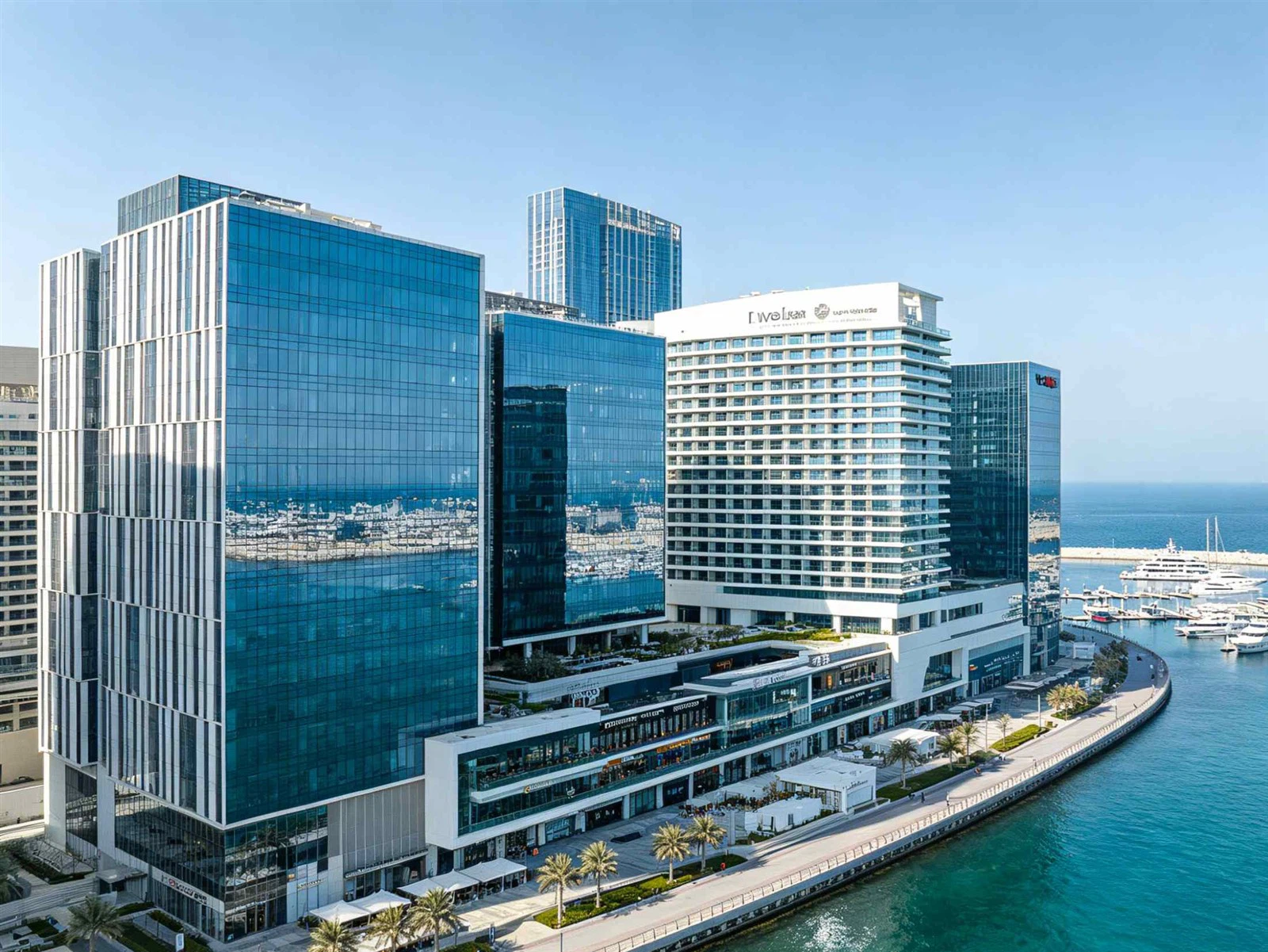
In coastal development projects and multi-unit commercial projects, the evaluation of impact-resistant window manufacturers is rarely based solely on product specifications. During the procurement phase, developers and general contractors often face curtain wall systems that are not yet fully finalized, with details such as structural interfaces, installation sequence, and enclosure coordination still being refined. Therefore, the selection of manufacturers focuses more on assessing the system's adaptability than on comparing static product data.
A key factor is the ability to operate within incomplete design information. In many projects, final slab edge conditions, anchoring zones, and waterproofing transitions are not fully stabilized when bidding begins. Manufacturers are required to interpret evolving drawings without compromising fabrication logic. This demands engineering flexibility beyond standard catalog-based supply.
Another critical factor is fabrication tolerance control. For impact window systems used in high-rise coastal buildings, small deviations in frame geometry or assembly alignment can accumulate across large facade areas. Developers and facade consultants evaluate tolerance management across extrusion processing, welding sequences, and thermal break assembly. The focus is consistency across production batches rather than nominal compliance alone.
System integration capability is also a key dimension. In commercial buildings, impact window systems must interface with curtain wall systems, structural framing, waterproofing layers, and interior finishes. Evaluation is based on coordination capability across anchoring details, drainage logic, and installation sequencing. Technical support involvement during design coordination is increasingly considered essential.
Installation support capability is particularly important in coastal developments where facade performance is sensitive to site conditions. Manufacturers are expected to provide installation guidance aligned with real construction sequencing, including structural tolerances, waterproofing transitions, and field adjustments. In many cases, installation support is treated as part of manufacturing responsibility.
Long-term performance under environmental stress is also part of evaluation logic. In coastal environments, impact window systems are exposed to wind pressure, humidity cycling, and salt exposure. Developers assess whether manufacturers have demonstrated stable system behavior in similar project conditions, particularly in air-water tightness and thermal movement response.
Delivery reliability and production scalability further influence decision-making in multi-unit projects. For large-scale developments, consistency in lead time, batch production, and scheduling alignment becomes part of the risk profile. Evaluation extends beyond capacity to include predictability under phased construction conditions.
Overall, the evaluation process shifts from product comparison toward system-level risk assessment, where manufacturers are positioned within facade coordination and building envelope requirements rather than treated as standalone suppliers.
How System-Level Coordination Affects Impact Window Installation and Facade Integration
In coastal developments and multi-unit commercial projects, the installation performance of impact window systems is rarely determined by the window product alone. It is more directly shaped by how the system is coordinated with structural design, facade detailing, waterproofing strategy, and construction sequencing before installation begins. Once coordination is incomplete at system level, installation becomes a process of resolving design mismatches on site.
One of the most immediate impacts appears in structural interface alignment. In many commercial buildings, slab edges, embed locations, and anchoring zones are adjusted across different disciplines. When these inputs are not fully aligned with impact window shop drawings, installers often deal with continuous minor misalignment during installation. These deviations accumulate across the facade and affect installation rhythm.
Waterproofing integration is another critical point. Impact window systems are expected to function as part of a continuous envelope rather than isolated units. However, when transitions between curtain wall systems, wall assemblies, and window frames are not fully coordinated, sealing details are often adjusted on site. This becomes more noticeable in high-rise buildings where access is limited.
Installation sequencing is also sensitive to coordination. In multi-unit projects, window installation is tied to enclosure closure, interior progress, and inspection schedules. When facade, structural, and interior works are not aligned early, installation is often compressed or interrupted, increasing handling and adjustment pressure on site.
Another issue is tolerance stacking across facade systems. interface with curtain walls, insulation layers, and structural frames. When each system follows independent tolerance assumptions, deviations accumulate at connection points. This often leads to shim adjustments, additional sealant use, or frame repositioning during installation.
In coastal environments, these gaps become more visible under wind load, humidity variation, and building movement. Even when installation is completed, facade behavior may still vary if system assumptions were not aligned during coordination.
As a result, impact window installation is increasingly treated as execution of a pre-coordinated envelope system rather than an isolated construction activity. Installation quality depends largely on how early and how consistently system coordination was established during design and procurement stages.
In commercial buildings and multi-unit residential projects, selecting impact-resistant window manufacturers is increasingly seen as a risk-allocation decision rather than a simple procurement activity. Developers and general contractors are not making decisions about completely predetermined systems, but rather about situations where design information is incomplete and coordination efforts are constantly changing.
In coastal developments, facade definitions often remain in flux during procurement. Structural openings, slab edge conditions, and curtain wall interface details are continuously refined through coordination cycles. Manufacturers are therefore engaged before the envelope system is fully stabilized, which introduces structural uncertainty into the selection process.
To manage this, project teams place less emphasis on catalog data and more on execution stability under variability. The key concern is whether the manufacturer can maintain consistent fabrication output when opening conditions or anchoring assumptions change during design development. In practice, submittal compliance is less decisive than production stability under shifting inputs.
Interface behavior during installation becomes another major risk point. Anchoring logic, drainage paths, and waterproofing transitions are defined at fabrication stage but only validated under real site conditions. When these assumptions diverge from actual slab edge tolerances or sequencing constraints, adjustments tend to repeat across facade zones, increasing coordination pressure on contractors and facade consultants.
In multi-unit projects, batch consistency becomes a critical factor. Large-scale production across multiple phases can introduce subtle variations in assembly control or glazing integration. These differences are often not visible at handover but emerge under long-term coastal exposure, affecting facade uniformity over time.
Delivery reliability also becomes part of risk evaluation. Developers assess not only production capacity but also the ability to align manufacturing schedules with phased construction timelines. In multi-stage projects, stability across time is more valuable than peak output capacity.
As project delivery becomes more integrated, manufacturers are increasingly expected to participate earlier in design coordination. Engagement with architects, structural engineers, and facade consultants helps reduce interpretation gaps around performance assumptions, anchoring logic, and envelope continuity.
In coastal environments, wind load pressure, humidity cycles, and salt exposure amplify all system-level inconsistencies. Small deviations in fabrication or coordination assumptions tend to accumulate rather than remain isolated.
As a result, manufacturer selection is less about choosing a product and more about selecting an organization capable of maintaining system stability under evolving project conditions. The key differentiator is not compliance on paper, but predictability of behavior across design, fabrication, and installation phases.

In coastal developments and multi-unit commercial projects, impact window systems are increasingly integrated into building envelope strategy at the planning stage rather than treated as isolated facade components. For developers and project teams, this shift is driven less by product selection and more by the need to align multiple building systems under long-term performance and coordination constraints.
At early design stages, window systems are evaluated alongside curtain wall assemblies, insulation layers, waterproofing strategies, and structural interface conditions. Rather than being treated as standalone specifications, they are positioned within an integrated envelope framework where thermal performance, air tightness, structural load transfer, and moisture control are defined as interdependent requirements.
In coastal environments, this approach is reinforced by external exposure conditions. High wind pressure, humidity cycling, and salt exposure require the envelope to perform as a continuous system rather than a collection of independent components. Within this context, impact window selection is aligned with broader envelope targets, including thermal thresholds, air-water-structural performance balance, and long-term durability under cyclic loading.
From a coordination standpoint, responsibilities are distributed across disciplines. Architects define opening geometry and facade intent, structural engineers determine slab edge conditions and load feasibility, while facade consultants translate these inputs into interface logic between systems. Impact window systems are therefore embedded into a coordinated envelope model rather than treated as procurement items.
General contractors evaluate this integration from a sequencing perspective. Early envelope coordination allows installation logic, waterproofing transitions, and structural interfaces to be defined before site execution begins. This reduces late-stage conflicts, especially in multi-unit developments where repeated facade units amplify small inconsistencies across large building areas.
Lifecycle performance also becomes part of the decision framework. Developers increasingly assess how impact window systems contribute to long-term operational stability, including energy performance consistency, HVAC load behavior, maintenance intervals, and facade durability under environmental exposure. The window system is no longer viewed as a static enclosure element but as part of building performance over time.
. Their input extends beyond fabrication to include system feasibility, tolerance boundaries, and interface constraints. This early participation helps reduce gaps between design intent and manufacturing execution.
Overall, envelope integration reflects a shift from component-level optimization to system-level coordination. Performance outcomes are no longer determined by individual products, including impact window manufacturers, but by how effectively facade, structural, and environmental requirements are resolved as a unified system across project stages.
In this framework, impact window systems are not simply selected at procurement stage-they are embedded into envelope logic from the outset, where performance, coordination, and execution are defined as part of a single continuous system.


